Thursday, 20 December 2012

Festive Quiz


As it’s that time of the year again, I thought I’d lighten the mood with a wee quiz.  It’s more fun if you don’t Google the answers!  And I’ll post them in the comments section in a day or two.  No prizes, just the deep satisfaction of being a know-all.
 
1. What is the usual colour of a flight recorder black box?

2. How long did the Hundred Years War last?

3. What country makes Panama hats?

4. What animal(s) do we get catgut from?

5. What town do Grimsby Town Football Club play in?

Good luck, and seasonal goodwill to all.

Tuesday, 18 December 2012

Health & Safety Culture

As we approach the end of 2012, I'm reflecting on a year when human resource issues were frequently to the fore.  Back in January, the government jumped on the bandwagon of complaining about health and safety "red tape".  David Cameron promised he was "waging war against the excessive health and safety culture that has become an albatross around the neck of British businesses".

How quickly we forget! A generation ago, Britain experienced a run of tragedies, at the rate of more than one a year for five years, each causing multiple deaths, and touching the lives of so many of us. Our health and safety culture, far from being "excessive" is a product of those experiences, and our society is better for it.

Lest we forget:

1985              Manchester Airport             55 deaths

1985              Bradford                            56 deaths

1986              Sumburgh                          45 deaths

1987              Herald of Free Enterprise    193 deaths

1987              Kings Cross                       31 deaths

1988              Piper Alpha                        167 deaths

1989              Marchioness                      51 deaths

1989              Hillsborough                      96 deaths

Thursday, 13 December 2012

Against the herd

When I worked for Pearson plc in the 1990s, I was part of a newly-created business, Financial Times Management, specialising in management education.  When that business was just two years old, a decision was taken no rebrand it as FT Knowledge.  There was great enthusiasm for this tie-in with the in-vogue concept of knowledge management, but I felt it was too soon to be changing and the gains from this change were at best transitory and at worst delusional. I dissented and left the company, which went on to fail.

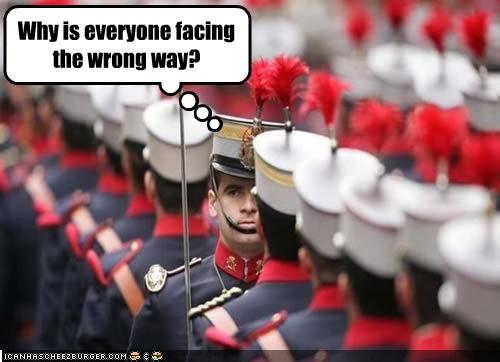
I was reminded of this when I saw a lot of praise for the latest restyling of People Management magazine.  Haven't we just had a restyling?  Are the benefits of the latest change a worthwhile use of CIPD member subscriptions? I think I'm facing the wrong way (or is it the wrong way?) on this one too.

It's a fairly minor thing, so I haven't said anything - until now.  I suspect others feel the same, but who wants to be the solitary guardsman facing the wrong way?

In the financial markets, this can be a valuable attribute.  Warren Buffet is the classic example,and we have many in Britain too - perhaps I should move into contrarian investment management.

Tuesday, 4 December 2012

Another evaluation update


In June, I wrote about progress in what was then a brand new action development programme.  That was the first cohort, since completed, of LEAD, which stands for Learning Evaluation Action Development, and is Airthrey Ltd’s flagship programme.  LEAD aims to support and equip those responsible for learning evaluation to conduct their own evaluation project (something real, not a simulation).

LEAD includes: a launch event, Masterclasses on learning evaluation approaches and applied research methods, individual tutorials, an action learning set, an online workspace, and a day of final presentations.  It also offers transparent evaluation of itself as an exemplar for participants.

The first cohort concluded in September, with three out of four participants successfully completing.  Their investigations are only now starting to yield impact measures, and their feedback is emerging.

I noted in June that one LEAD participant had said “it changed my life!” and I can now offer a more to-the-point testimonial:
 
"The LEAD programme was a great learning experience with its unique blend of workshops with Ken and Alasdair, supervised application of the learning to a real life evaluation project and learning from each other through the action learning set. I would highly recommend this programme as it provides foundational knowledge, skills and experience for anyone tasked with evaluating learning in their organisation.
(Alan Forsythe, Training & Development Manager at SHARE, and one of the participants in the first cohort).

A second cohort started in September, involving another four organisations, from sectors as diverse as mechanical engineering, defence, economic development, and a care charity.  Once again, the feedback has been overwhelmingly positive, and plans are already underway for a third cohort of LEAD to begin in February 2013.  Further information about LEAD, including how to book for the next cohort, is available at the Airthrey website.

It looks like LEAD is now a fixture in the evaluation calendar.

Thursday, 29 November 2012

Olympic spirit


The latest issue of People Management quotes Mike Morrison (@RapidBI on Twitter) "at the Olympic Games, many, many people got a lot out of volunteering. This should be explored as a business strategy".

This will come as no surprise to many in the 'Big Society', from the public and third sectors, where volunteering as a means of delivering public services is increasingly a way of life. Indeed, in the third sector - charities, social enterprises and community groups - volunteering is often the main way, sometimes the only way, anything gets done, starting with the directors and 'owners' of the enterprises themselves.

But will it fly in the private sector? Is unpaid work an acceptable means of making profits and yielding dividends for shareholders? Judging by the recent highlighting of concerns about engaging interns (who, if upaid, are de facto a kind of volunteer), the answer to that question is no. But is this really just a different way of expressing the entrepreneurial spirit? Are those who start new businesses, and commit long hours unpaid to realising their dreams, really that different from those who dedicate their time to charities or other good causes?

It seems to me we need more debate about this, and there must be scope to embrace volunteering in the culture of enterprise.

Wednesday, 28 November 2012

How learning adds value


I’m developing a model showing the various ways learning adds value in an organisation, and so far I’ve identified four clusters of different ways.

The classic learning paradigm
This is the process flow from: acquisition of knowledge/skills/behaviours; to performance improvement; to business results. This is the main sort of value we expect learning to add.

Talent development
This is about learning as an employee benefit, where employees enjoy the experience, feel more valued, and/or benefit from a break from their day-to-day activities.  Employees can come to see learning opportunities as part of the rewards package of an organisation, which can aid talent recruitment and retention.

Communications
There are two aspects to this.  One is the benefits of meeting other people, exchanging ideas and opinions with them, and networking both during and after the learning event – this only applies to learning opportunities involving meeting other people (although this could be online, or remote).  The second is the information gathering (by the organisation) from learners (including from evaluation activities).

Further learning
There are three parts to this.  One is the development of transferable learning skills (and so capacity for change) – e.g., study skills, note-taking, questioning, précis, how to get the most from sessions, etc.  The second is the acquisition of extra skills from the learning process, rather than the content – e.g., IT skills from e-learning, writing skills from completing assignments, chairing groups, scribing, facilitating, etc.  The third is the unexpected learning – knowledge and skills beyond the intended objectives.

I’m interested in feedback on this model. Does it make sense? Is there anything I’ve missed?

Monday, 19 November 2012

Number crunching


We live in a world of big data. As the cliché has it, the Internet changes everything, and it has certainly transformed our access to reams of data and valuable analysis of it.

I spent the recent US Presidential election campaign following the blogging exploitsof Nate Silver, erstwhile poker player and baseball analyst. Silver made sense of the extensive polling and voter behaviour data to correctly predict not just the overall result, but the actual outcome in every single state in the Union. His successful predictions were in marked contrast to those who "felt" Mitt Romney would win, or had a "hunch" he would beat President Obama.

In a feature in yesterday's Observer, Silver said "Numbers aren't perfect, but for me, it's numbers with all their imperfections versus bullshit. You had people saying 'you can't quantify people's feelings through numbers!' But what's the alternative?"

This resonates for me with the evaluation debate in learning and development. We have people saying you can't measure 'soft' skills and that you can't adequately measure learning overall. My old friend Martyn Sloman is far from alone when he opines "The first thing to be said is that much learning cannot be measured, and this may be the most valuable kind. The second is that even if it could be measured, such activities may not be worthwhile." (Training in the Age of the Learner)

I would reverse Sloman's formulation. Quantification of some learning may not be worthwhile, but with so much data, and so much analytical power, available, we should be trying to measure as much as we can. Evidence based on data is so much more meaningful than any personal feelings about the value of learning. We need a much clearer idea of what we are accomplishing from learning, and much better evidence to inform essential ongoing improvements in what learning and development contributes. However distasteful some find the numerical analysis of "people's feelings", it is a challenge we must rise to.